Paramedic Resume: Examples & Guide (2026)
Læs denne guide på danskA paramedic resume is screened for credentials first: NREMT-Paramedic, state licensure, and current ACLS, PALS, and BLS cards. Right behind that, employers want your service type and volume, 911 or interfacility, urban or rural, calls per shift, and evidence you perform under pressure and document cleanly.
Here is how to structure a paramedic resume that gets you the interview. Moving toward the hospital side? See our registered nurse resume and medical assistant resume guides.
What EMS employers screen for first
- Licensure: NREMT-P and state paramedic license, both current, with numbers if customary.
- Certifications: ACLS, PALS, BLS; PHTLS or ITLS and NIMS/ICS courses strengthen the stack.
- Service profile: 911 vs interfacility transport (IFT), urban or rural, call volume, and unit type.
- Judgment signals: clean driving record, protocol adherence, QA/CQI results, preceptor or FTO roles.
How to structure a paramedic resume
- Header: name, location, phone, email.
- Licenses and certifications: NREMT-P, state license, ACLS/PALS/BLS with expiry dates, list these high.
- Summary: years in EMS, service type, and one standout fact (volume, FTO role, CQI score).
- Experience: each service with system type, call volume, and measurable outcomes.
- Skills: ALS interventions, equipment, documentation systems.
- Education and clinical hours last.
Skills and keywords to include
EMS postings and applicant tracking systems filter on exact credential and skill terms. If the posting says "ACLS" and "12-lead interpretation", both belong in your skills section and at least one bullet.
- Credentials: NREMT-P, state paramedic license, ACLS, PALS, BLS, PHTLS/ITLS, NIMS/ICS 100-200-700-800.
- ALS skills: 12-lead ECG acquisition and interpretation, IV/IO access, advanced airway (supraglottic, intubation), medication administration, cardiac monitoring, CPAP.
- Operations: scene management, triage (START/SALT), patient handoff and reports, ePCR documentation (ESO, ImageTrend, Zoll).
- Soft skills with proof: de-escalation, family communication, preceptor/FTO experience.
Resume bullet examples
Weak: "Responded to emergency calls and treated patients."
Strong: "Ran 8-12 ALS calls per 24-hour shift in a high-volume urban 911 system, maintaining 98% protocol-adherence scores across quarterly CQI reviews."
Weak: "Performed advanced life support procedures."
Strong: "Achieved a 92% first-pass success rate on advanced airway placements over 3 years, above the system average of 81%."
Weak: "Helped train new EMTs."
Strong: "Served as FTO for 6 new paramedics and EMTs, all cleared to independent status on schedule, and rewrote the orientation checklist adopted service-wide."
Full paramedic resume example
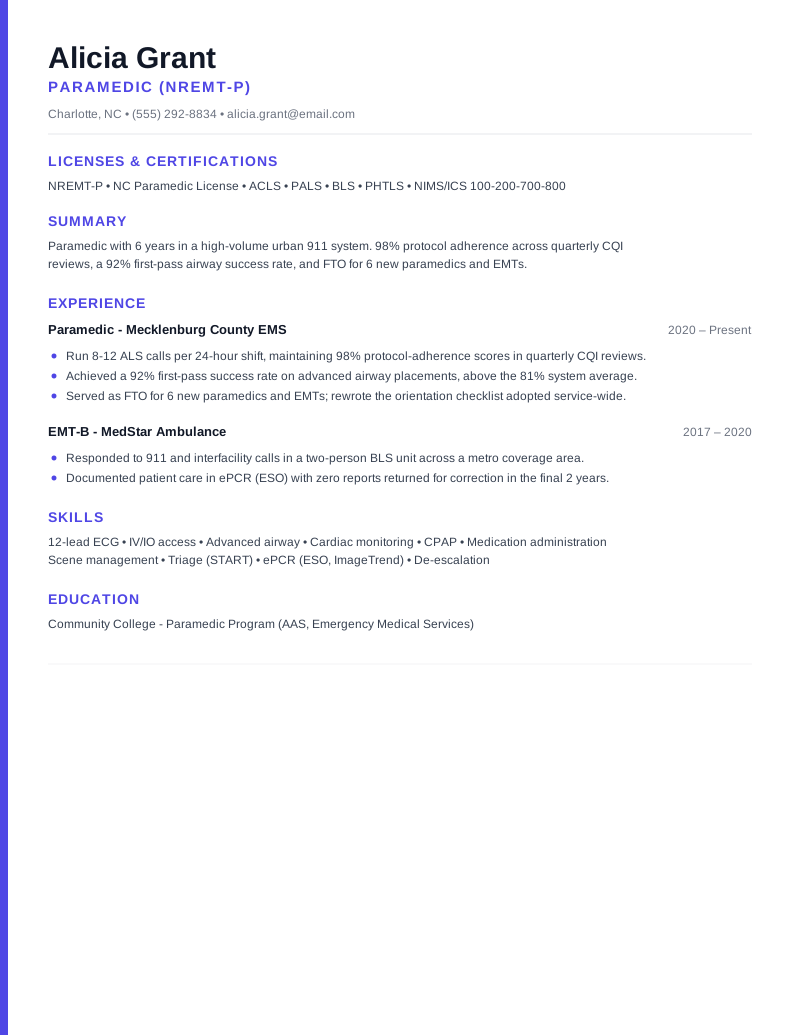
Alicia Grant - Paramedic (NREMT-P) | Charlotte, NC | (555) 292-8834 | alicia.grant@email.com
Licenses & Certifications: NREMT-P · NC Paramedic License · ACLS · PALS · BLS · PHTLS · NIMS/ICS 100-200-700-800
Summary: Paramedic with 6 years in a high-volume urban 911 system. 98% protocol adherence across quarterly CQI reviews, a 92% first-pass airway success rate, and FTO for 6 new paramedics and EMTs.
Experience - Paramedic, Mecklenburg County EMS (2020–Present): ALS provider in a high-volume urban 911 system.
- Run 8-12 ALS calls per 24-hour shift, maintaining 98% protocol-adherence scores in quarterly CQI reviews.
- Achieved a 92% first-pass success rate on advanced airway placements, above the 81% system average.
- Served as FTO for 6 new paramedics and EMTs; rewrote the orientation checklist adopted service-wide.
Experience - EMT-B, MedStar Ambulance (2017–2020): 911 and interfacility response in a two-person BLS unit.
- Responded to 911 and interfacility calls in a two-person BLS unit across a metro coverage area.
- Documented patient care in ePCR (ESO) with zero reports returned for correction in the final 2 years.
Skills: 12-lead ECG · IV/IO access · Advanced airway · Cardiac monitoring · CPAP · Medication administration · Scene management · Triage (START) · ePCR (ESO, ImageTrend) · De-escalation
Education: Community College - Paramedic Program (AAS, Emergency Medical Services)
Common mistakes to avoid
- Letting expired or missing cert dates raise questions, list current expiry dates.
- Not distinguishing 911 from IFT experience, they are weighted very differently.
- Describing duties every medic shares instead of your volume, scores, and outcomes.
- Omitting ePCR systems and equipment names that postings filter on.
Quick checklist
- NREMT-P, state license, and ACLS/PALS/BLS with dates in the top third.
- Service type (911/IFT), system, and call volume stated for each role.
- At least one quality number: CQI scores, first-pass rates, or commendations.
- Preceptor, FTO, or special-team roles called out.
- One page for most careers; clean ATS-readable layout.
Ready to build yours? Browse more resume examples, start from a free Applygrid resume template, keep it ATS-friendly, and pair it with a tailored letter from our AI cover letter generator.
Frequently asked questions
What certifications should be on a paramedic resume?
NREMT-Paramedic and your state license first, then ACLS, PALS, and BLS with current expiry dates. Add PHTLS or ITLS, NIMS/ICS courses, and any specialty credentials (critical care, flight, tactical). Put them in a dedicated section in the top third of the page.
How do I make a paramedic resume stand out?
Numbers. Call volume per shift, system size, protocol-adherence or CQI scores, first-pass airway success, FTO or preceptor counts. Most paramedic resumes list identical duties; the one that quantifies performance under pressure is the one that gets the interview.
Should a new paramedic list EMT experience?
Yes. EMT-B experience shows scene time, call volume, and system familiarity, exactly what employers worry a new medic lacks. List it as its own role with volume numbers, and lead the resume with your new paramedic credentials and clinical-internship numbers.
Applygrid builds the ATS-friendly resume builder and AI cover letter generator behind these guides. We write from hands-on experience with how applicant tracking systems parse resumes, what recruiters actually screen for, and what gets job seekers to the interview.
Put this into practice
Build an ATS-friendly resume and generate a tailored cover letter with Applygrid, free to start.